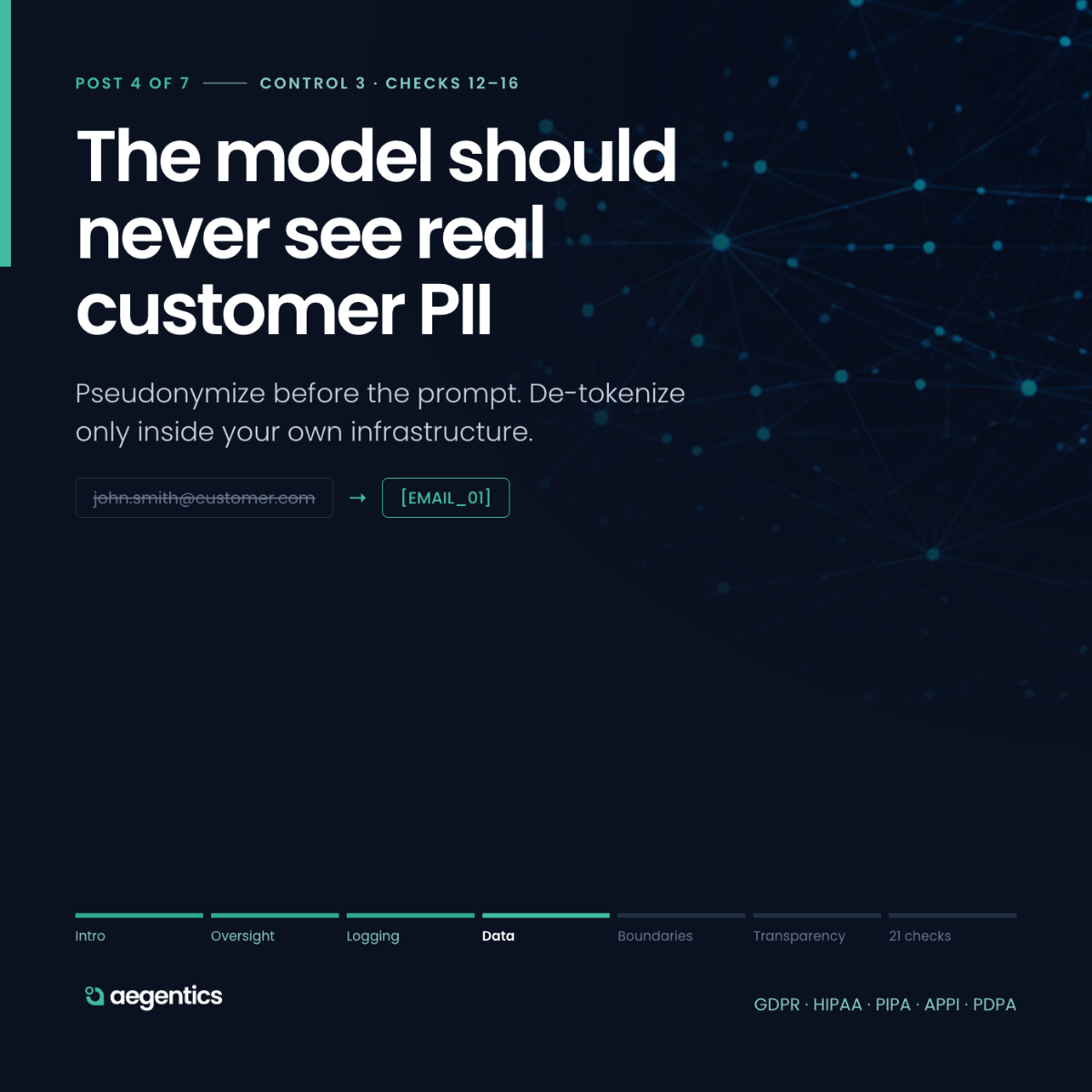
The cleanest answer is the same everywhere: the model should never see the real data.
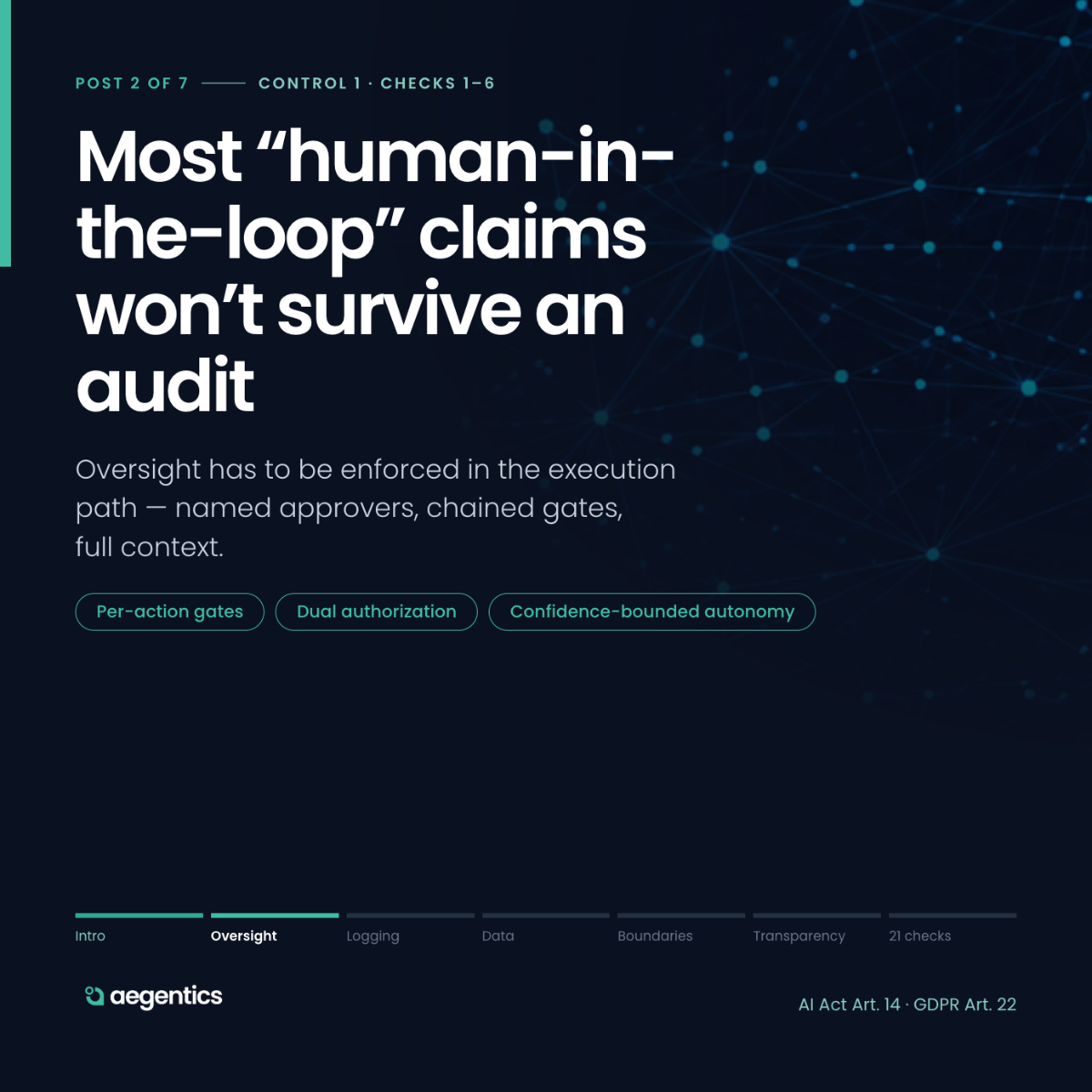
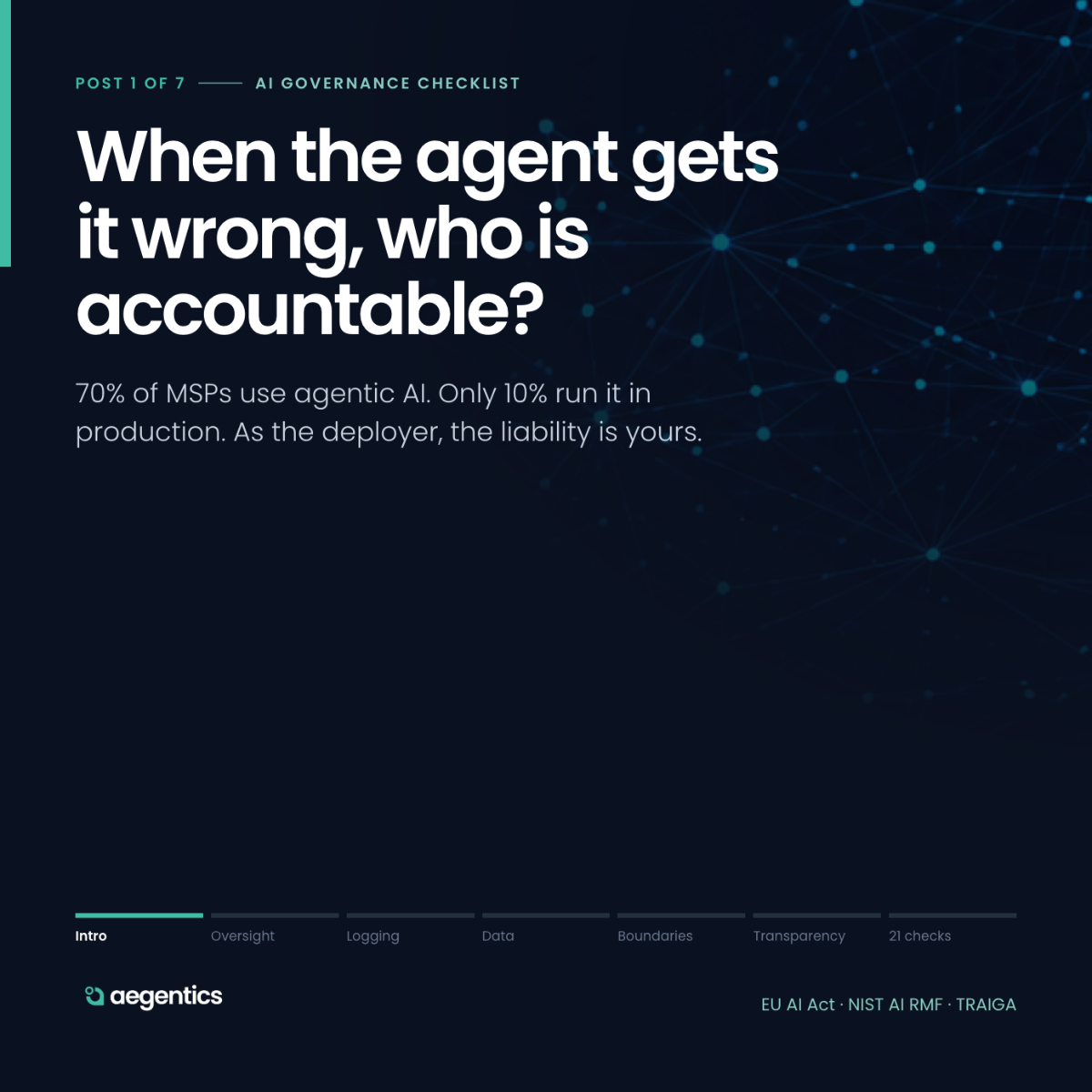
This is Post 4 in our 7-part series based on The AI Governance Checklist for MSPs. After covering the need for the checklist (Post 1), human oversight (Control 1), and logging & traceability (Control 2), we now examine Control 3: Data Protection and Residency — the five checks that keep personal data under your control even when AI is in the execution path.
Why Data Protection Is Non-Negotiable for MSPs
MSPs sit in the middle of a processing chain: end customer → MSP → AI platform → LLM provider. Every link must be contractually covered and technically controlled. Regulators do not care that the AI “doesn’t train on your data.” They care whether readable personal data ever left your environment in a form that could be processed, stored, or intercepted.
Here are the five specific requirements that form Control 3:
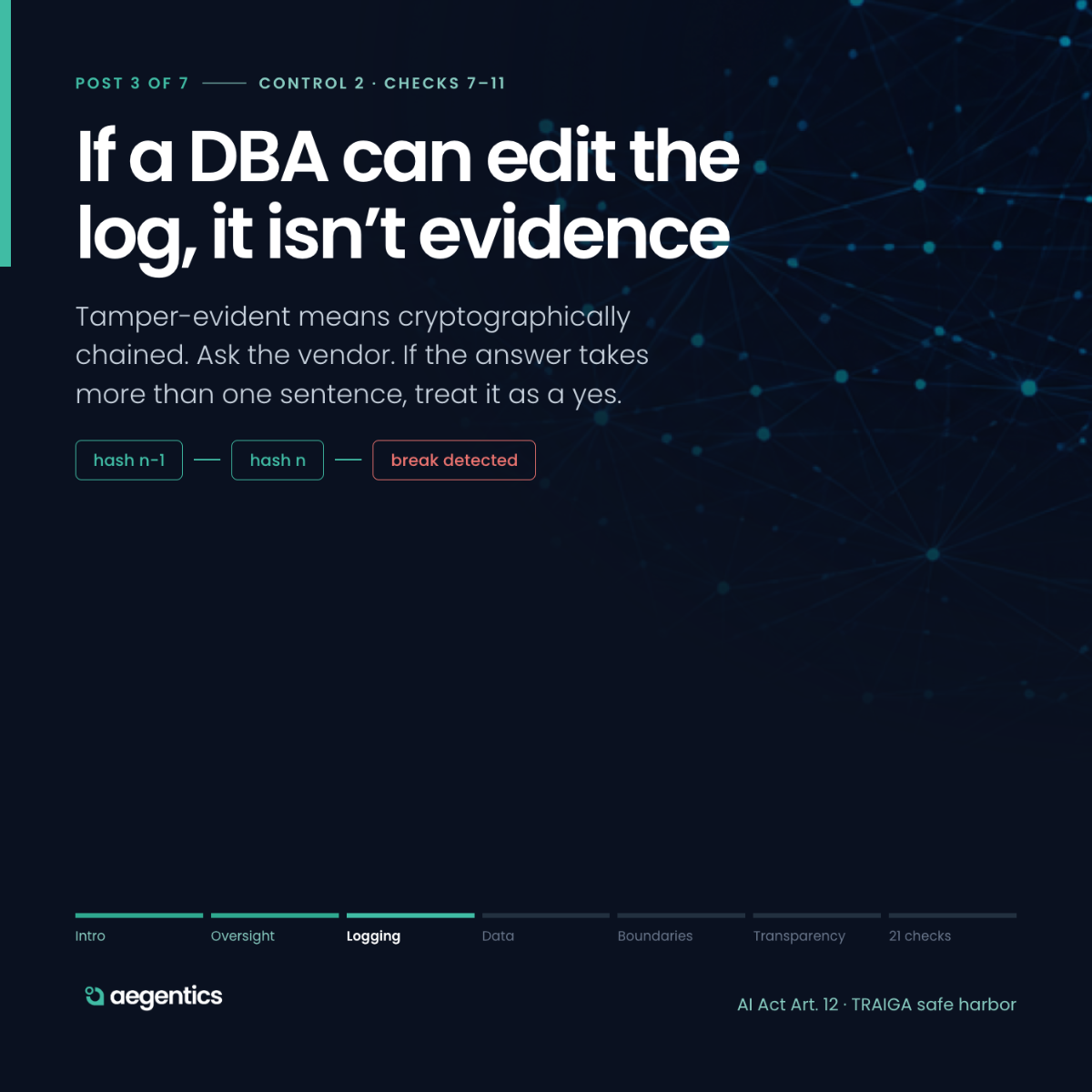
(Read about check 7-11 in last week’s post: Control 2; Logging and Traceability)
12. Personal data is pseudonymized before it reaches any LLM.
Not “the LLM provider doesn’t train on your data.” The model should never see real personal data at all. Emails, phone numbers, national ID numbers, bank account numbers, and IP addresses must be replaced by tokens at runtime. De-tokenization happens exclusively inside the platform’s own infrastructure, and every tokenization event is logged for traceability.
13. The processing chain is documented and contractually covered.
End customer → MSP → platform → LLM provider. Each link needs a processing agreement — a DPA in the EU, a BAA for US healthcare clients, and appropriate outsourcing and transfer safeguards under APPI, PIPA, and PDPA. If the vendor cannot draw this chain for you, they have not thought about it.
14. Historical ticket data used for AI knowledge is pseudonymized in the pipeline.
A knowledge article about fixing a mailbox issue does not need to know whose mailbox it was. Any cross-customer knowledge must be fully stripped of personal data before it enters the AI knowledge base.
15. Tenant isolation is architectural, not a filter.
Customer A’s data, policies, and knowledge must be structurally inaccessible from Customer B’s context. Ask how isolation is enforced at the data layer, not just the UI or application layer. Filters can fail; architectural separation is harder to breach.
16. Data residency is a configuration, not a roadmap item.
EU customer data must be processed in the EU; equivalent regional options must exist where your customers require them. Cross-border transfer restrictions are hardening simultaneously in the EU, Korea, and Australia, while US state privacy laws increasingly ask where processing occurs. If residency requires “talking to sales,” it does not yet exist as a control.
What Strong Data Protection Looks Like in Practice
Imagine a ticket: “John Smith (john.smith@customer.com, +1-555-123-4567) cannot access his mailbox. Please reset password and check MFA status.”
A properly governed platform will:
- Tokenize the name, email, and phone number before any data reaches the LLM
- Allow the model to classify the request and extract parameters using only the tokens
- Perform de-tokenization only inside the platform’s controlled environment when constructing the actual execution commands
- Log every tokenization and de-tokenization event
- Ensure the entire flow for this customer stays within the configured residency region
- Keep all of this activity completely isolated from every other tenant
The result: the LLM never processes readable personal data, the processing chain remains auditable, and you can answer a customer’s or regulator’s data-flow questions with confidence.
Practical Tip for MSPs: During vendor evaluation, ask for a live demonstration of a ticket containing realistic PII. Watch exactly where tokenization occurs and confirm that the raw data never appears in any prompt sent to the model. Request the current DPA/BAA language and the list of sub-processors.
How to Evaluate Vendors on Data Protection (Control 3)
Put these questions to any AI platform vendor:
1. Does your LLM ever receive real email addresses, phone numbers, or national ID numbers from our tickets? Where exactly does pseudonymization happen?
2. Can you show the full processing chain (end customer → MSP → platform → LLM) and the corresponding contracts?
3. How is historical ticket data stripped of personal information before it becomes AI knowledge?
4. Is tenant isolation enforced at the data-storage layer or only through application filters?
5. Can we configure data residency for EU, US, and APAC customers today without a custom project?
Vendors who answer with architecture diagrams, runtime flow diagrams, and existing contractual templates earn trust. Vague assurances about “enterprise privacy controls” do not.
Regulatory Mapping for Control 3
This control directly addresses:
- EU: GDPR Articles 5, 25, 28, and 30
- US: HIPAA, GLBA, CCPA/CPRA and expanding state privacy laws
- APAC: Korea PIPA, Japan APPI, Singapore PDPA, Australian Privacy Act
A platform that keeps personal data out of the model and offers configurable residency satisfies the strictest of these regimes and therefore the rest.
Conclusion & Takeaways
Data protection is not an optional add-on for AI agents in MSP environments — it is a foundational control. When the model never sees readable personal data, many of the hardest compliance questions simply disappear.
Key Action Items:
1. Map your current or prospective AI platform against the five checks in Control 3.
2. Confirm that pseudonymization happens before any third-party model is invoked.
3. Verify that data residency and tenant isolation are architectural configurations available today.
4. Ensure every link in the processing chain is covered by the appropriate
agreements (DPA, BAA, etc.).